Charles Cullen’s kidney donation to Ernie Peckham
The Good Nurse: A True Story of Medicine, Madness, and MurderCharles Cullen’s kidney donation to Ernie Peckham turned a jailed serial killer’s body into a possible means of saving a life. The act was at once practical and deeply charged: Ernie needed a transplant, Cullen offered himself as a donor, and the two proved to be a rare match. The kidney was transplanted successfully, but the donation also reopened questions about Cullen’s motives, the victims’ families’ sense of justice, and what it meant for a man who had killed patients to offer help through medicine.
The request and Ernie Peckham’s illness
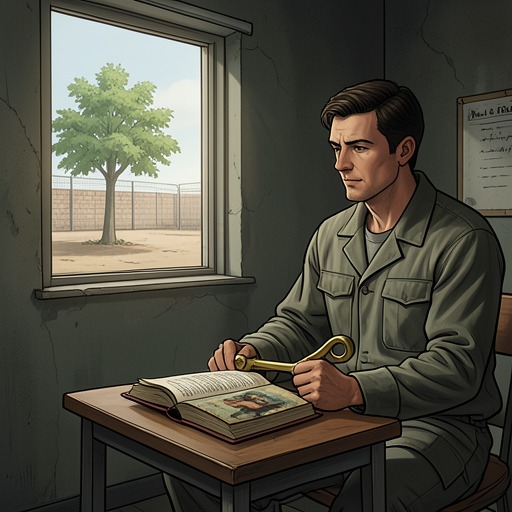
In August 2005, an envelope reached Cullen at the Somerset County Jail. Inside was a clipping from a Long Island community newspaper about Ernie Peckham, who needed a kidney, with a handwritten request asking whether Cullen could help. Ernie was not Cullen’s friend or close acquaintance. He was about Cullen’s age, had a wife and four children, and was the brother of Catherine Westerfer, Cullen’s estranged former partner and the mother of his youngest child, whom he had never met. Cullen could barely recall whether he had encountered Ernie at a wedding.
Ernie’s kidney failure had begun after an untreated streptococcal infection in 2003. His immune response damaged the microscopic filters in both kidneys, leaving his body unable to clear toxins. By the time he sought medical attention, the kidneys had failed. Dialysis at Stony Brook Hospital meant three two-hour sessions each week, but it did not halt his deterioration. His access veins repeatedly clotted, and a surgically placed port in his neck left him vulnerable to further infection. He had to give up his scoutmaster role and reduce his time at the local VFW; a transplant offered the prospect of a life beyond recurring dialysis.
The need was urgent because a donor kidney could be difficult to find. Ernie’s relatives were not medically eligible, while a deceased-donor kidney could mean waiting five to seven years, a delay that his declining health might not permit. His mother, Pat Peckham, had already mortgaged her home to help with medical bills. She placed a public appeal in the local paper, including Ernie’s blood type and the hospital’s donation hotline, but no donor responded. She then sent the clipping to the jail, asking a man who had fathered her daughter’s child—and who had killed hospital patients—to consider giving her son an organ.
Cullen offers to be tested
Cullen was not new to donation. He had given about twelve gallons of blood and registered as a bone-marrow donor despite knowing no one who needed a transplant. He told the book’s narrator that someone had asked for something he might be able to give, and that it seemed worth trying. His offer was not based on a close relationship with Ernie; it arose from a public appeal and the possibility that Cullen might be medically useful.
Cullen raised the idea with the visiting Catholic deacon at the jail by asking whether an inmate could donate a kidney. The question moved through the prison’s pastoral staff to Reverend Kathleen Roney, the jail chaplain. She helped arrange the initial blood testing. Stony Brook Hospital sent a kit containing color-coded tubes for Cullen’s blood; the hospital would compare his antigens with Ernie’s to establish whether he could be a suitable donor. Roney later described herself as the person who carried the blood samples through the process.
The odds of matching a stranger were poor. A close blood-relative match is ordinarily preferable, but no one in Ernie’s family could donate. Cullen’s result was a perfect six-for-six antigen match, an outcome Roney and her prayer group interpreted as miraculous. The match made further medical testing possible, although it did not by itself settle every question about the operation or its consequences. X-rays, scans, and other examinations still had to be conducted in person rather than through materials sent to the jail.
Secrecy and the transplant
The donation became entangled with Cullen’s incarceration and the public meaning of his crimes. He had been convicted of killing patients at hospitals where he worked and was serving life sentences. His offer to save a patient’s life could therefore be read as compassion, an effort at redemption, or manipulation. Victims’ families could see the irony in a nurse who had killed patients now seeking to save one, and some worried that the donation would give Cullen renewed attention or leverage. The book leaves the question unresolved: Cullen did not explain himself fully, and his chaplain’s belief in the sincerity of his decision could not make its meaning certain to everyone else.
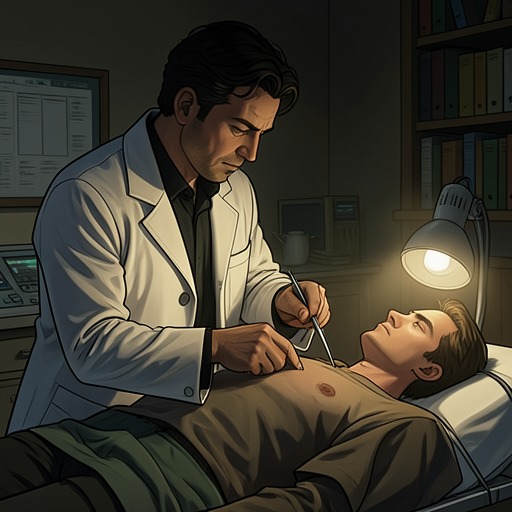
The procedure was carried out under strict secrecy. Guards took Cullen to Saint Francis Medical Center at night, handcuffed him to a hospital bed, and drew his blood. He initially believed that the trip might concern something other than the transplant. The next morning, he was told to answer only direct questions and was given an assumed identity: Johnny Quest. After receiving medication to relax him, he signed one form under that name and another as Charles Cullen, also known as Johnny Quest. The false identity was intended to protect the operation’s secrecy, not to change who was legally donating the organ.
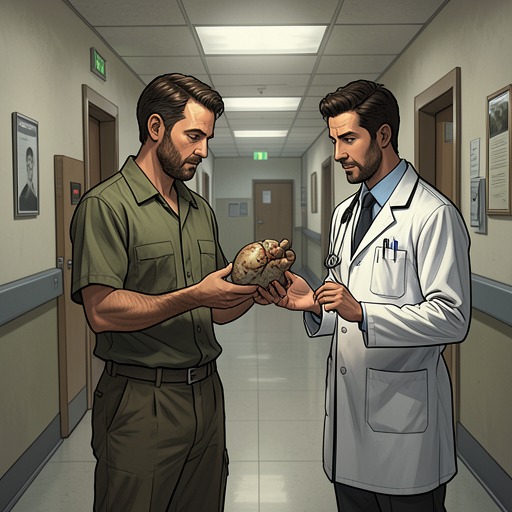
On August 18, Cullen’s kidney was placed in a red Coleman cooler and flown north from Trenton aboard a Lifestar helicopter to Stony Brook Hospital. Ernie was anesthetized while surgeons opened his abdomen and prepared the transplant site in his pelvis. They connected the donor kidney’s renal artery to Ernie’s blood supply and joined the veins. When a clamp was removed from an external iliac artery, the kidney filled with oxygenated blood and began functioning in Ernie’s body. The operation’s immediate physical result was strikingly concrete: an organ that had belonged to a prisoner began filtering blood for the man whose appeal had reached his cell.
Meaning and limits of the act
The transplant did not erase Cullen’s murders, settle the claims of victims’ families, or provide a definitive account of why he volunteered. Its force comes partly from that unresolved contradiction. Cullen had spent his working life in hospitals, where helpfulness and access to medical resources had been intertwined with lethal harm; in prison, he again offered medical help, this time through an organ that could not be mistaken for a routine gesture. Yet the book presents several possible explanations without treating any as proven: compassion, religious conviction, a desire to help his former partner’s family, or an effort to recover some moral standing.
The donation also changed Cullen’s position in public life. Prison had appeared to contain and neutralize him, but the kidney appeal and the transplant returned him to headlines and renewed attention from the victims’ families. Roney’s belief that the donation reflected the same person who had committed the killings emphasized Cullen’s moral complexity rather than resolving it. The successful match and operation established what his body could do for Ernie; they did not answer what the choice meant, or whether a single act of bodily generosity could be separated from the history that made it so difficult to receive.